Solution for Screen Mirroring timeout on macOS 15+
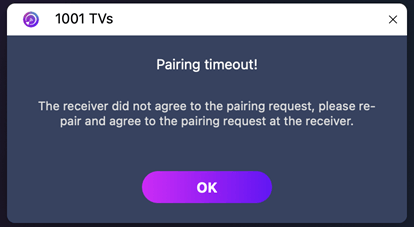
If you’re using macOS 15 or later and encounter the error:
“Pairing timed out! The receiver did not accept the pairing request. Please try pairing again.”
—even when both devices are connected to the same Wi-Fi network—the issue is likely caused by macOS 15+’s Local Network permission restrictions.
How to Fix It
For macOS 15 +:
1. Open Terminal and run the following commands:
Enter the first command, then press Enter:
sudo rm /Library/Preferences/com.apple.networkextension.plistWhen prompted, enter your login password and press Enter again. (The password will not be shown on screen.)
Then enter the second command, and press Enter:
sudo rm /Library/Preferences/com.apple.networkextension.uuidcache.plist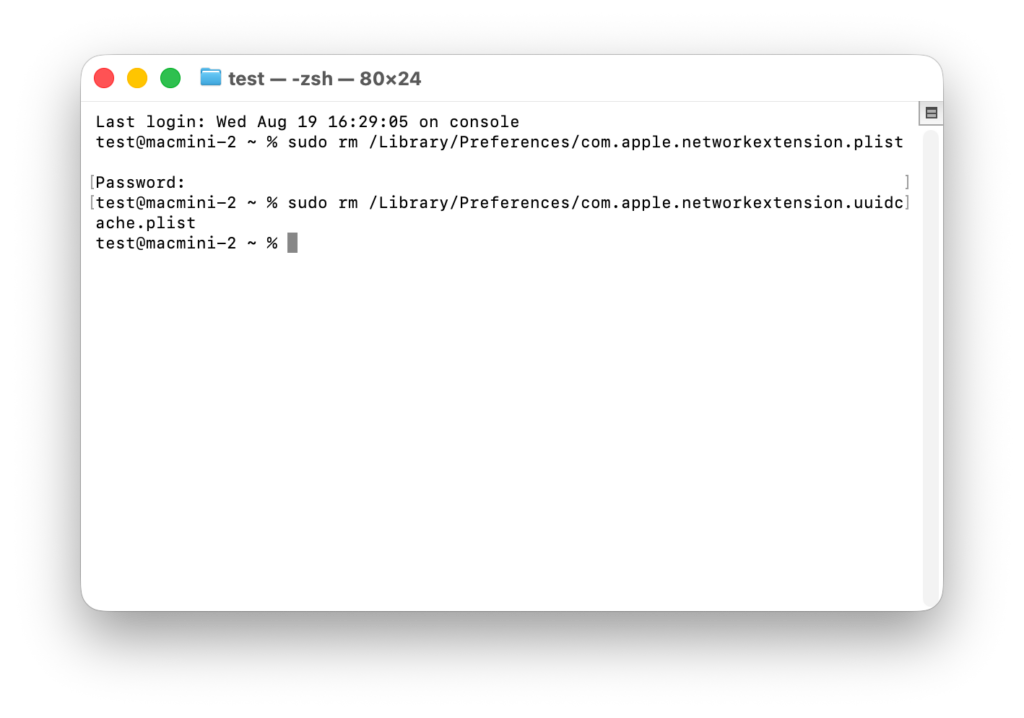
2. Restart your Mac, open 1001 TVs, and try pairing again.
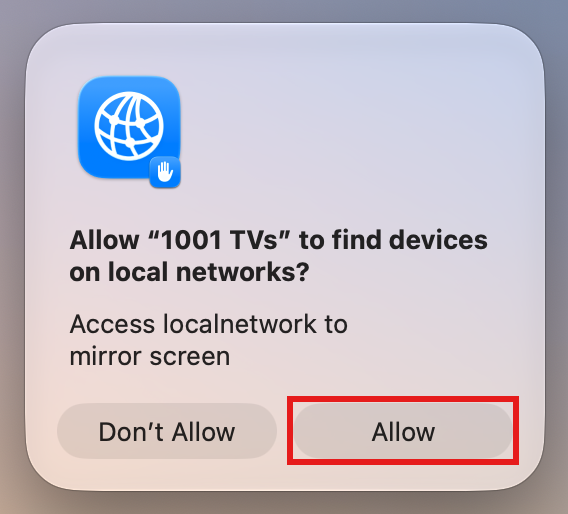
⚠️ Important: When you open the app, if a Local Network permission prompt appears, be sure to click “Allow” to grant access.
For macOS 26+:
1. Create a New User Account
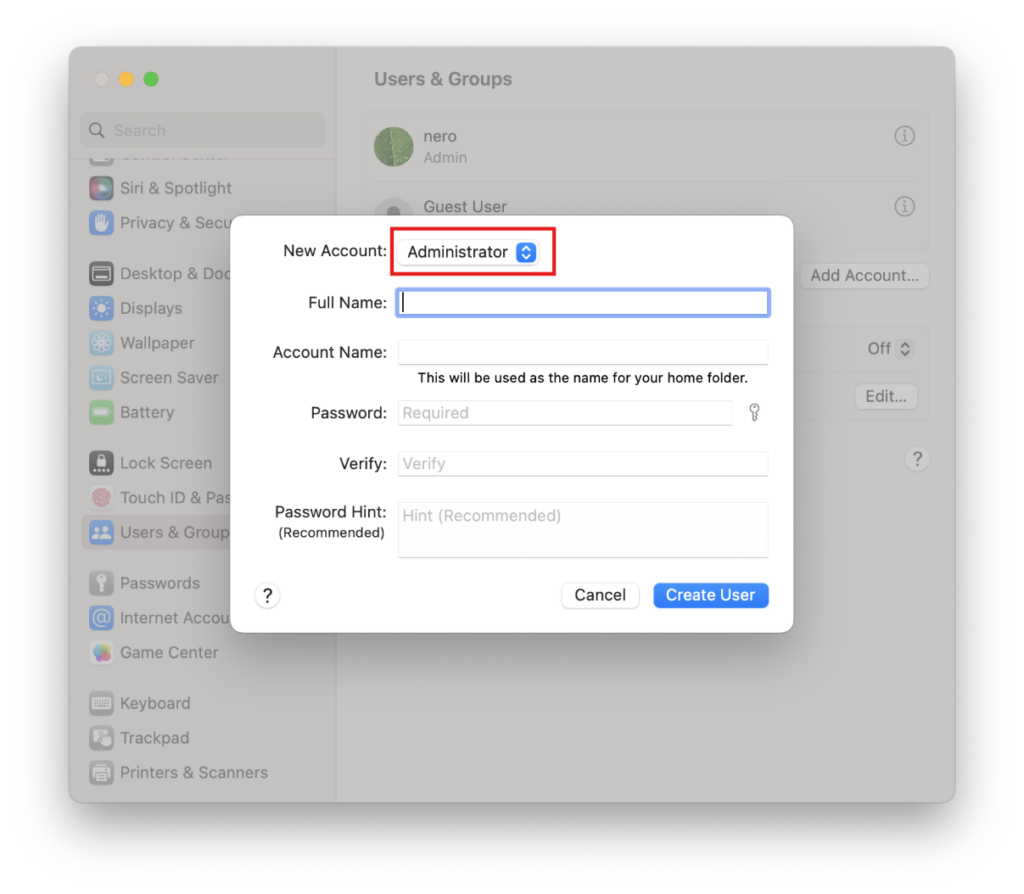
Go to System Settings > Users & Groups and click Add Account.
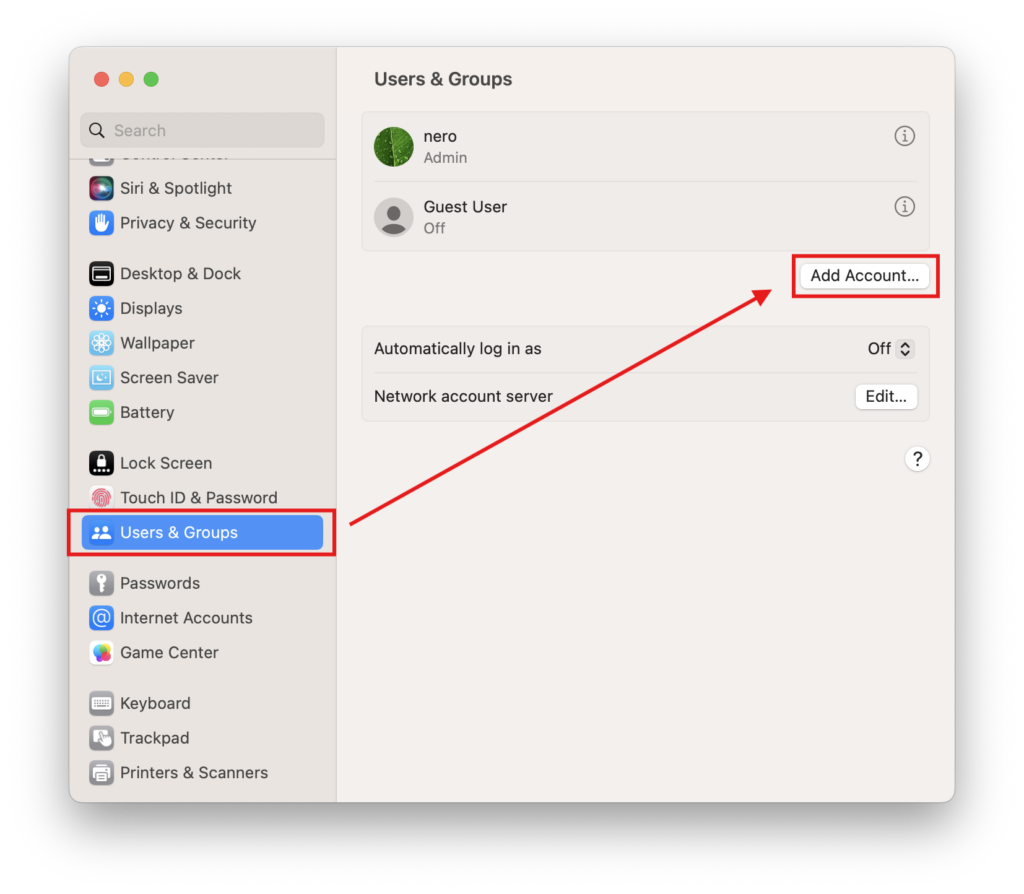
Set the new account type to Administrator, then enter the Full Name and Account Name, set a password, and click Create User.
2. Log In to the New Account
Click the Apple logo in the top-left corner and select Log Out to sign out of your current account.
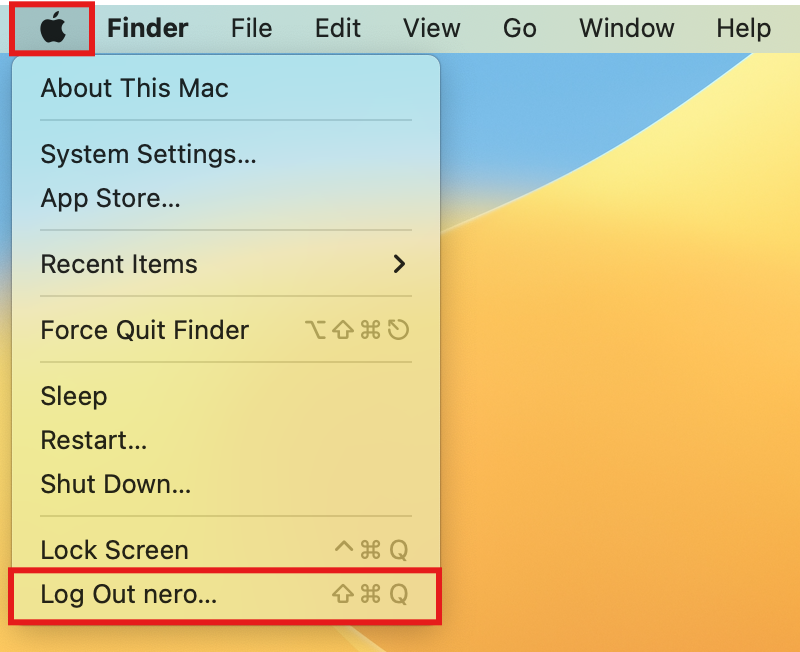
Log in to the account you just created.
3. Retry Pairing
Restart your Mac, open 1001 TVs, and try pairing again.
⚠️ Important: When you open the app, if a Local Network permission prompt appears, be sure to click “Allow” to grant access.
As a last resort, please follow the steps below.
1. Start up in Recovery Mode
Click the Apple logo in the top-left corner and select Shut Down.
Depending on your Mac’s chip type, do the following:
- Apple Silicon Mac: After shutting down, press and hold the power button (Touch ID) until you see “Loading startup options”. Release the power button, then click Options.
- Intel Mac: After shutting down, press the power button to turn on your Mac, then immediately press and hold Command (⌘) + R until the Apple logo or a progress bar appears on screen, then release the keys.
Once you are in Recovery Mode, select your account and enter your login password.
2. Turn off system protection temporarily
In the Recovery menu bar, click Utilities > Terminal.
Type the following command and press Enter:
csrutil disableWhen you see “Successfully disabled System Integrity Protection.”, click the Apple logo and select Restart.
3. Delete the cached permission files
After your Mac restarts, open Terminal (found in Launchpad or Applications > Utilities).
Enter the first command and press Enter:
sudo rm /Library/Preferences/com.apple.networkextension.plistWhen prompted, enter your login password and press Enter again. (Your password will not be shown on screen — this is normal.)
Enter the second command and press Enter:
sudo rm /Library/Preferences/com.apple.networkextension.uuidcache.plist4. Turn system protection back on
Shut down your Mac again.
Repeat Step 1 to re-enter Recovery Mode.
Open Terminal, type the following command, and press Enter:
csrutil enableWhen you see the success message, click the Apple logo and select Restart.
5. Try pairing again
Restart your Mac, open 1001 TVs, and try pairing again.
⚠️ Important: When you open the app, if a Local Network permission prompt appears, be sure to click “Allow” to grant access.

Read More
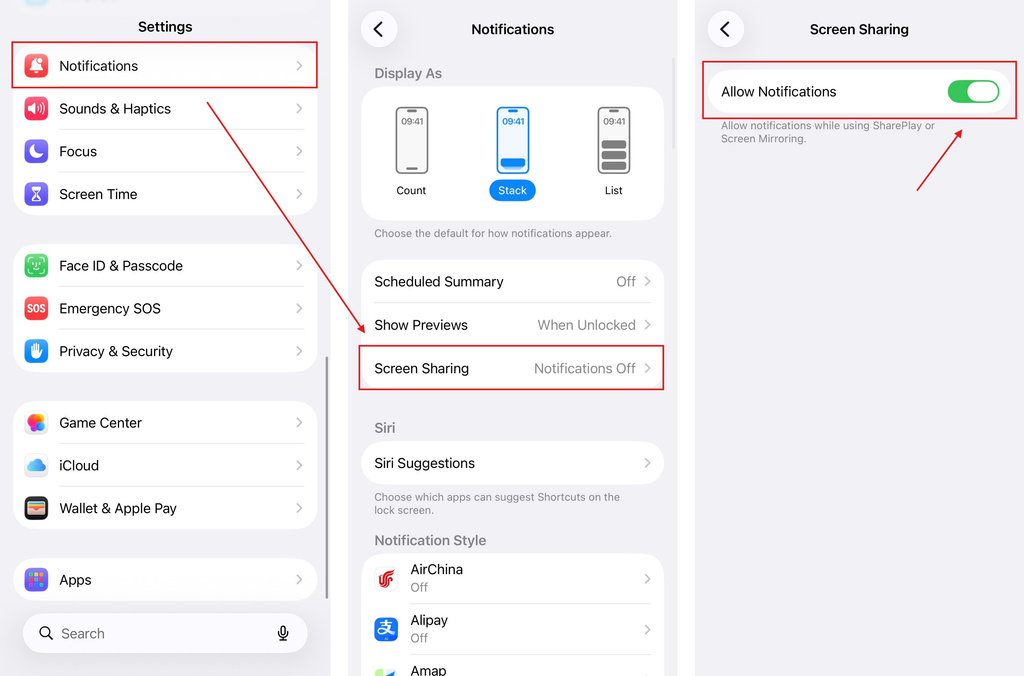 iOS: How to Fix Missing App Notifications During Screen Mirroring
Why Notifications Are Missing When you mirror your iPhone screen, notifications from other apps may not appear on the mirrored screen. This can happen…
iOS: How to Fix Missing App Notifications During Screen Mirroring
Why Notifications Are Missing When you mirror your iPhone screen, notifications from other apps may not appear on the mirrored screen. This can happen…
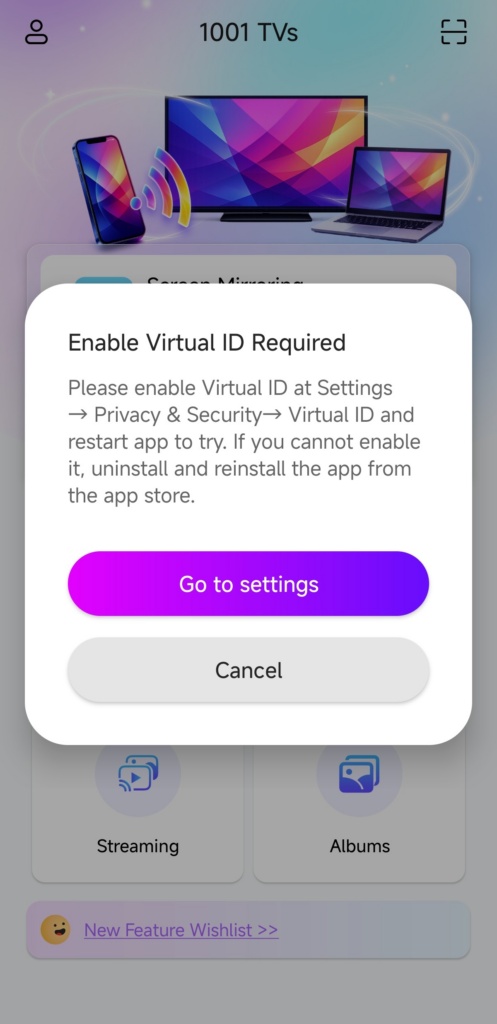 How to Fix the Enable Virtual ID Required Pop-Up
If you're using a Xiaomi or Redmi phone or tablet, you might see a pop-up that says "Enable Virtual ID Required" when you launch…
How to Fix the Enable Virtual ID Required Pop-Up
If you're using a Xiaomi or Redmi phone or tablet, you might see a pop-up that says "Enable Virtual ID Required" when you launch…

