检测到浏览器语言为中文,点此切换到中文页面->

飯店數位看板:1001 TVs 如何改變顧客體驗
Picture this: You’ve just checked into a hotel after a long journey. The lobby feels welcoming, but the static printed signs about amenities, restaurant hours, and local attractions look dated. Traditional hospitality signage leaves guests searching for basic information, and hotel staff spending precious time answering the same questions repeatedly.

Here’s what the hospitality industry data reveals: 73% of guests want digital displays for wayfinding and information, yet 68% of hotels still rely primarily on static signage and printed materials. This disconnect creates friction in the guest experience and operational inefficiencies.

The traditional approach to hospitality digital signage involves expensive proprietary systems, complex content management software, and ongoing technical support contracts—making it inaccessible for many independent hotels, restaurants, and hospitality businesses.

The Cost Problem

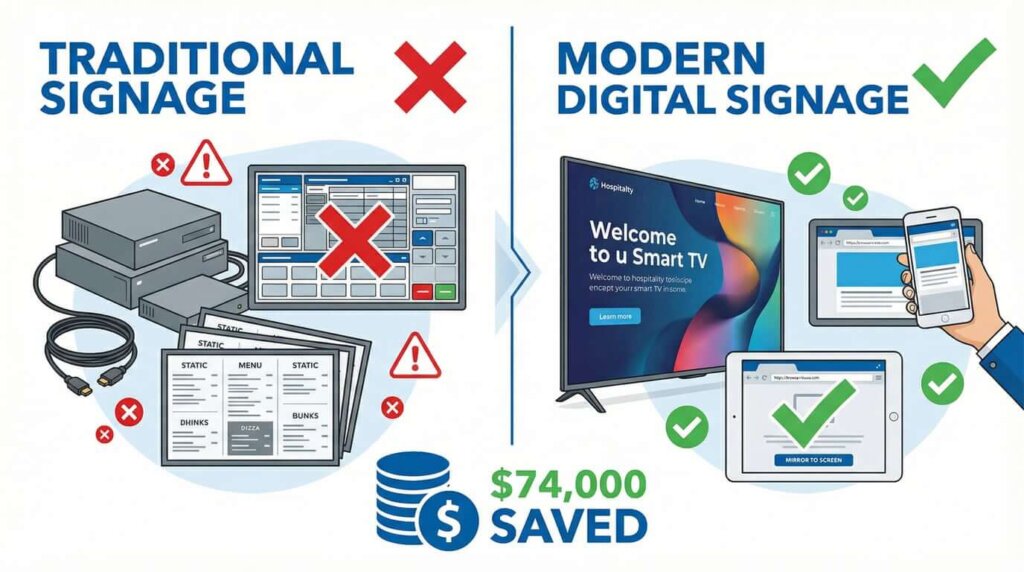
Walk into most hotel lobbies today, and you’ll see the same setup: expensive proprietary hardware boxes mounted behind screens, displaying static content that hasn’t been updated in weeks. Conference rooms still rely on clunky HDMI adapters that never seem to work when you need them.

After working with dozens of hospitality properties, I’ve seen properties invest $50,000-150,000 in traditional digital signage infrastructure, only to find their staff can’t update content without calling IT support. Guests struggle with incompatible devices during presentations.

The Solution: Three Essential Requirements

Digital signage for hospitality shouldn’t require a computer science degree to operate. The most successful implementations share three characteristics:

1.Device flexibility: Your signage solution needs to work with all devices—iPhones, Android tablets, Windows laptops, and Chromebooks.

2.Zero-friction deployment: When a conference attendee needs to present, the connection should happen in under 30 seconds.

3.Staff accessibility: Your front desk team, restaurant managers, and event coordinators should be able to update displays themselves.

Practical Applications

Lobby & Reception Areas

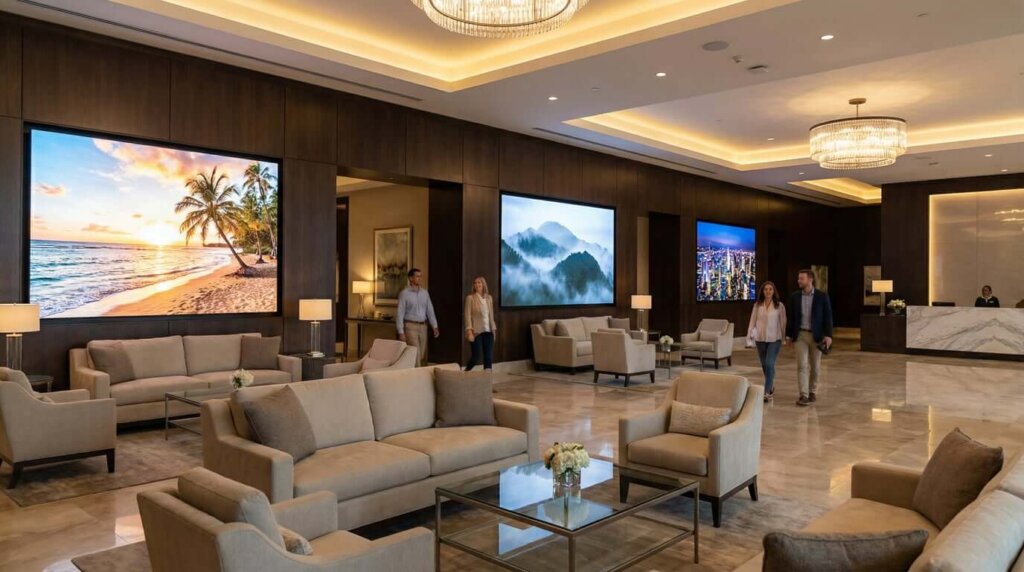
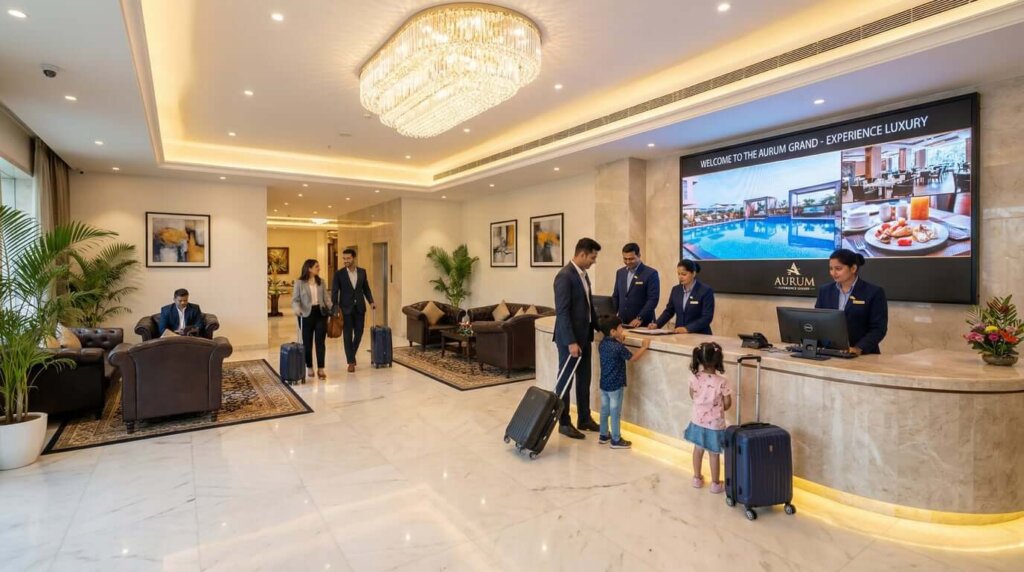
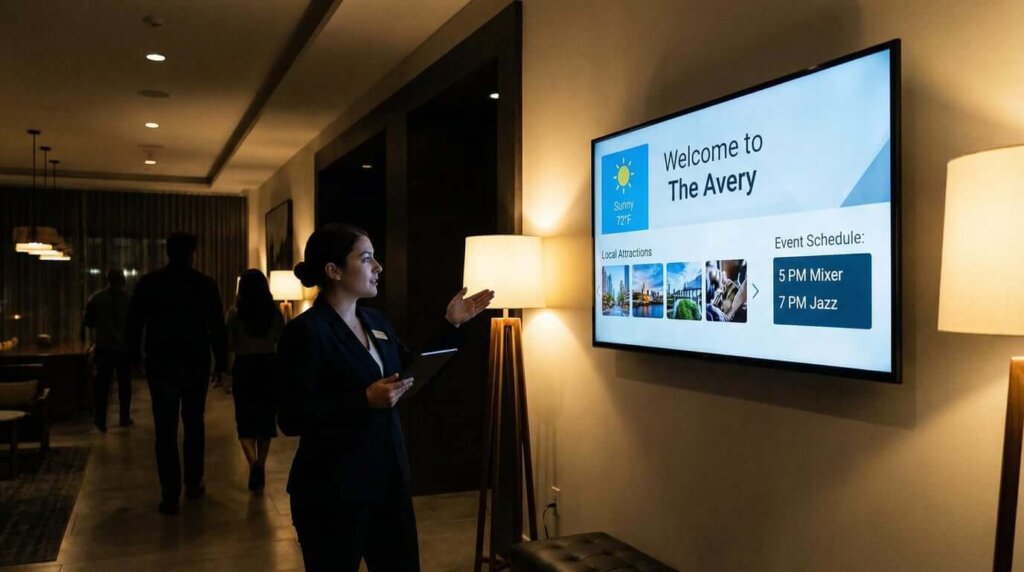
Welcome displays should do more than show your logo. Properties use screen mirroring to display:

  • Real-time local weather and traffic conditions
  • Curated photo galleries of property amenities
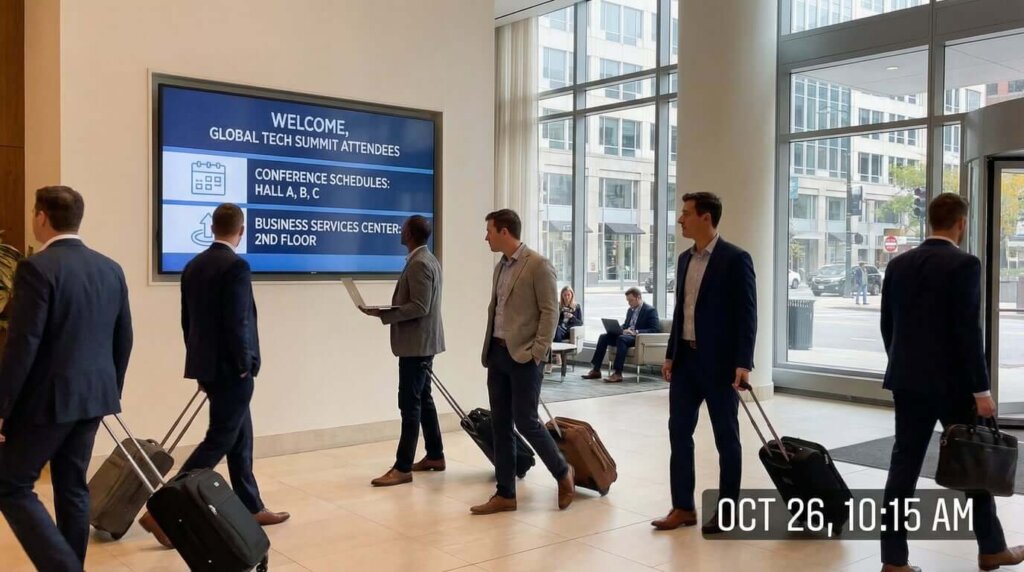
  • Current event schedules and conference room availability

Restaurant & Bar Environments

Dynamic menu boards connect directly to kitchen operations. When an item sells out or a new special becomes available, displays update in real-time.

Live kitchen feeds create transparency in open-kitchen concepts, reducing perceived wait times.

Conference & Meeting Spaces

BYOD presentation support should be universal. Browser-based mirroring eliminates 90% of connection issues because it requires no app installation.

USB fallback connectivity matters more than most properties realize. When wireless networks get congested, wired connections ensure presentations proceed without interruption.

The Cost Reality Check

Traditional enterprise solutions typically cost:

  • $1,500-3,000 per room for hardware (Crestron, Barco, Mersive)
  • $150-200 per year per room for licensing
  • $5,000-15,000 for professional installation

For a 50-room conference hotel, that’s $75,000-150,000 upfront, plus $7,500-10,000 annually.

Modern screen mirroring approaches leverage existing infrastructure:

  • $0 additional hardware (uses existing smart TVs)
  • $20 per year per device for software licensing
  • Self-service setup by existing staff

For the same 50-room property, that’s $1,000 annually. The savings—$74,000-149,000 in year one, $6,500-9,000 annually thereafter—can fund other guest experience improvements.

Implementation Strategy

Rolling out digital signage across multiple properties requires a phased approach:

Phase 1: Pilot property (2-4 weeks)

  • Deploy in a single property with diverse use cases
  • Train staff on content management
  • Gather feedback from guests and employees

Phase 2: Regional expansion (1-2 months)

  • Roll out to 3-5 properties in the same region
  • Develop standardized content templates
  • Create staff training materials

Phase 3: Enterprise deployment (3-6 months)

  • Deploy across all properties
  • Implement centralized content management
  • Enable local customization while maintaining brand consistency

1001 TVs: Your Complete Digital Signage Solution

1001 TVs offers everything mentioned in this analysis: cross-platform compatibility, zero-friction deployment, and staff accessibility—all at $20 annually per device compared to the $74,000+ savings from traditional solutions.

9 Core Features for Hospitality

特點Hospitality Use CaseImplementation
螢幕鏡像Universal device mirroringGuest presentations, demos
相簿投影Digital photo galleriesLobby displays, amenities
瀏覽器鏡像Web-based mirroringGuest BYOD presentations
傳送檔案Wireless transfersMenu updates, content
白板投影Interactive drawingCollaborative planning

👉下载 1001 TVs 👈

💰 Pricing: $20 annually

Real User Testimonials

“I’ve tried many screen mirroring apps. 1001 TVs is the most stable and effortless.” – Property Manager, Austin TX

“Works perfectly with our Apple TV, Samsung, and Hisense smart TVs.” – Hotel IT Director

Quick Start Guide

Week 1: 下載自 1001tvs.com, install on 2-3 devices, test basic functions

Week 2: Deploy in lobby, test guest device compatibility, train staff

Week 3-4: Full rollout, establish content procedures, measure results

Why Choose 1001 TVs

Cost Savings for 50-room Hotel:

  • Traditional: $75,000-150,000 upfront + $7,500-10,000/year
  • 1001 TVs: $1,000/year (50 devices × $20)
  • Your Savings: $74,000-149,000 first year

Ready to transform your guest experience? Visit 1001tvs.com. Your guests and staff will thank you for it.